Ubuntu 26.04 LTS: Rust coreutils, Wayland-only, and kernel 7.0
- Bastien
- 13 Apr, 2026
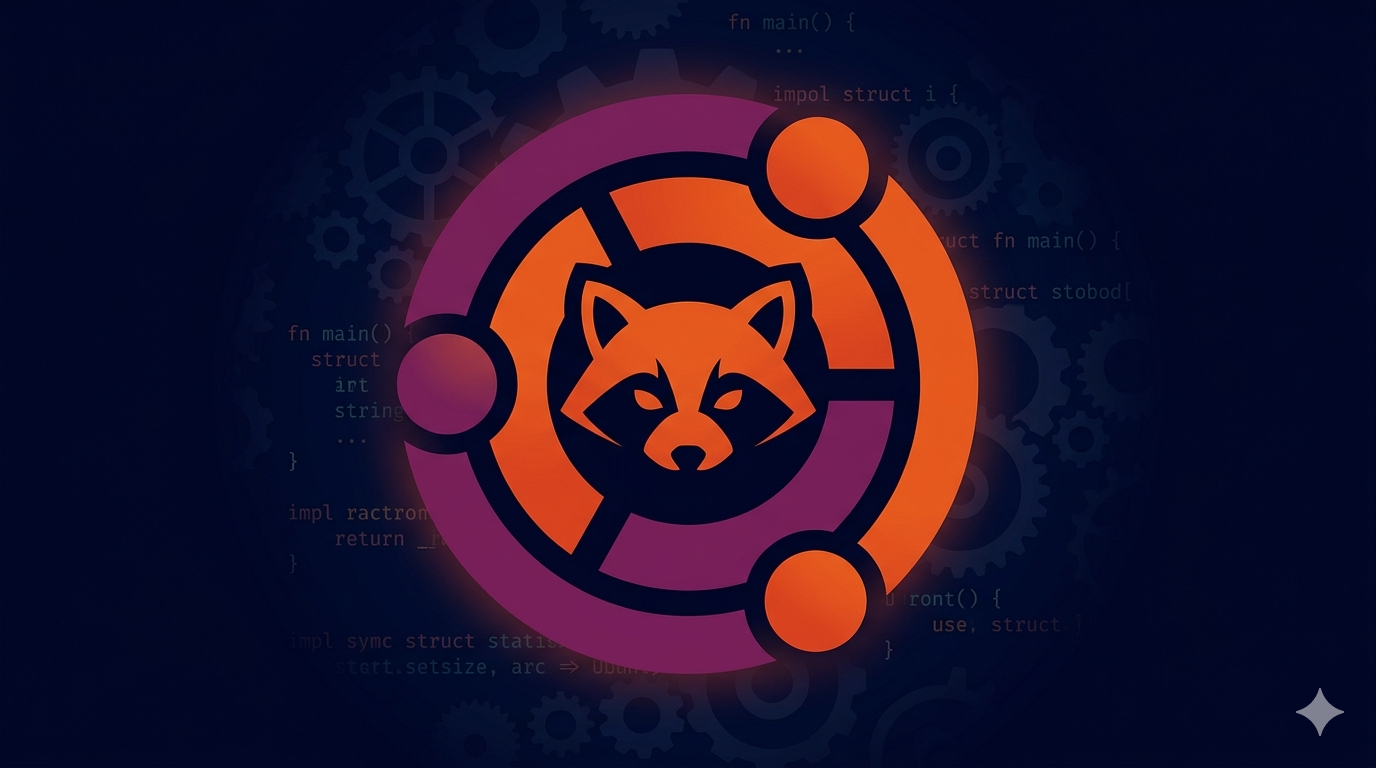
Ubuntu 26.04 LTS: Resolute Raccoon
Ubuntu 26.04 LTS, codenamed Resolute Raccoon, ships on April 23, 2026. The codename honors Steve Langasek, a former Debian and Ubuntu release manager who passed away in early 2025.
This is not a routine LTS bump. The jump from 24.04 (Noble Numbat) spans four GNOME releases, a major kernel version change, and a quiet revolution in the system core: Rust-based coreutils and sudo, Wayland as the only display server, and TPM-backed full disk encryption out of the box. For teams running 24.04 in production, this is the most significant migration since the systemd transition.
Core system changes
The foundation of 26.04 is built on three shifts: a new kernel, a new init system, and Rust in the critical path.
Linux kernel 7.0 replaces 6.8. The headline features are hardware enablement for Intel Nova Lake, AMD Zen 6, and the sched_ext framework — an eBPF-based extensible scheduler that lets developers implement scheduling policies as user-space programs. Crash dumps are now enabled by default on both desktop and server installations.
Dracut replaces initramfs-tools as the default initial ramdisk generator, bringing systemd integration in the initrd, Bluetooth support during early boot, and NVMe over Fabrics.
systemd 259 enforces cgroup v2 exclusively — cgroup v1 support is removed entirely. The upgrade will be blocked if v1 is detected. /tmp is now tmpfs by default (RAM-backed, lost on reboot).
The Rust transition
Two critical system components are now written in Rust:
rust-coreutils replaces GNU coreutils. This provides the fundamental command-line utilities (ls, cp, cat, base64, etc.) with memory-safe implementations. Performance is measurably better on operations like base64 encoding.
sudo-rs replaces the traditional C-based sudo. It is a drop-in replacement for most configurations, with password feedback enabled by default. The original sudo remains available as sudo.ws. Note: the sudo-rs plugin system is not supported — complex sudoers configurations should be tested before upgrading.
This is a milestone. Ubuntu is the first major distribution to ship Rust-based coreutils and sudo as defaults in an LTS release.
Desktop: GNOME 50 on Wayland-only
The desktop jumps from GNOME 46 to GNOME 50 — four release cycles of improvements in one upgrade. The GNOME session now runs exclusively on Wayland. X11 login is removed from GDM. XWayland remains installed for legacy X.org application compatibility.
New default applications:
| Application | Replaces | Notes |
|---|---|---|
| Ptyxis | GNOME Terminal | GTK4, pinned tabs, container support, per-project profiles |
| Papers | Evince | Partially Rust, GTK4 |
| Loupe | Eye of GNOME | Rust-based, Glycin library |
| Showtime | Totem | libadwaita minimalist design |
| Resources | GNOME System Monitor | GNOME Circle app |
Key desktop improvements:
- Fractional scaling moved to stable with blur minimization
- Variable refresh rate now stable for supported monitors
- JPEG XL native support
- Accent colors apply to entire folder icons (redesigned: shorter, squatter, rounder)
- GIMP 3.0 (non-destructive editing, GTK3, modern color management)
- Firefox 149/150, LibreOffice 25.8, Thunderbird 128 (Supernova)
Hardware and gaming
ARM64 desktop: Ubuntu ships an official ARM64 desktop ISO for the first time. It supports virtual machines, ACPI/EFI platforms, and Qualcomm Snapdragon devices — opening Ubuntu Desktop to ARM-based laptops and tablets running UEFI firmware.
GPU support: Intel Core Ultra Xe2 and Arc B580/B570, NVIDIA Dynamic Boost enabled by default with Wayland suspend/resume support, and Mesa 26.0 with Vulkan 1.4.
Gaming: The NTSYNC kernel driver delivers better performance for Windows games running through Wine and Proton. Combined with Mesa 26.0 and improved AMD RADV ray tracing, this is the most gaming-ready Ubuntu LTS to date.
Security
TPM-backed full disk encryption is available in the desktop installer. With a TPM 2.0 chip, the disk unlocks automatically on boot without a passphrase. Recovery key management and firmware update integration are supported — fwupd prompts for recovery key backup before updates that affect TPM state.
OpenSSH 10.2 removes DSA signature support entirely and introduces the mlkem768x25519-sha256 hybrid post-quantum key exchange algorithm. The PerSourcePenalties option adds authentication rate limiting.
Snap permissions prompting via the new Security Center enables consent prompts when snaps request camera, microphone, or file system access.
Toolchain
| Tool | 24.04 | 26.04 |
|---|---|---|
| GCC | 14 | 15.2 |
| Python | 3.12 | 3.13.9 (3.14 available) |
| LLVM | 18 | 21 |
| Rust | 1.75 | 1.93 |
| Go | 1.22 | 1.25 |
| OpenJDK | 21 | 25 |
| .NET | 8 | 10 |
| Zig | — | 0.14.1 (new) |
x86-64-v3 optimized package variants are now available for CPUs with AVX2, BMI2, and FMA support (Haswell and later, 2013+).
Server stack
| Component | 24.04 | 26.04 |
|---|---|---|
| PostgreSQL | 16 | 18 |
| MySQL | 8.0 | 8.4 LTS |
| MariaDB | 10.11 | 11.8.6 |
| Docker | 24 | 29 |
| containerd | 1.7 | 2.2.1 |
| PHP | 8.3 | 8.5 |
| Samba | 4.19 | 4.23 |
| HAProxy | 2.8 | 3.2 LTS |
New additions: Valkey 9.0.3 (Redis-compatible) and DocumentDB 0.108 (MongoDB-compatible API).
OpenStack 2026.1 (Gazpacho) brings parallel live migrations, IOThread default, UEFI firmware delegation, and OVN BGP support.
Breaking changes
Teams upgrading from 24.04 should review these carefully:
- cgroup v1 removed — containers relying on v1 will not start; upgrade is blocked if v1 is detected
- Wayland-only GNOME — X11 session unavailable; test apps under XWayland
- Dovecot 2.4 — configuration format incompatible with 2.3; migration guide required
- containerd 2.x — API breaking changes from 1.x; test container tooling
- APT
apt-keyremoved — legacy key management fails; migrate to gpgv-based keys - Removable media mounts at
/run/mediainstead of/media - System V scripts deprecated — this is the last release with SysV compatibility
Conclusion
Ubuntu 26.04 LTS is the most architecturally significant LTS release in years. The Rust transition (coreutils, sudo), Wayland-only desktop, cgroup v2 enforcement, and post-quantum SSH represent real shifts in how a Linux distribution is built and secured — not incremental version bumps.
For production deployments, the migration from 24.04 requires more preparation than usual: cgroup v2 compliance, Dovecot configuration migration, containerd API changes, and sudo-rs testing. But the payoff — kernel 7.0, GNOME 50, TPM-backed encryption, and a five-year support window to 2031 — makes the effort worthwhile.
Support runs through April 2031, extendable to 2036 with Ubuntu Pro.
Release notes: documentation.ubuntu.com/release-notes/26.04 · Download: ubuntu.com
Tags :
- Ubuntu
- Linux
- GNOME
- Wayland
- Open Source
- LTS